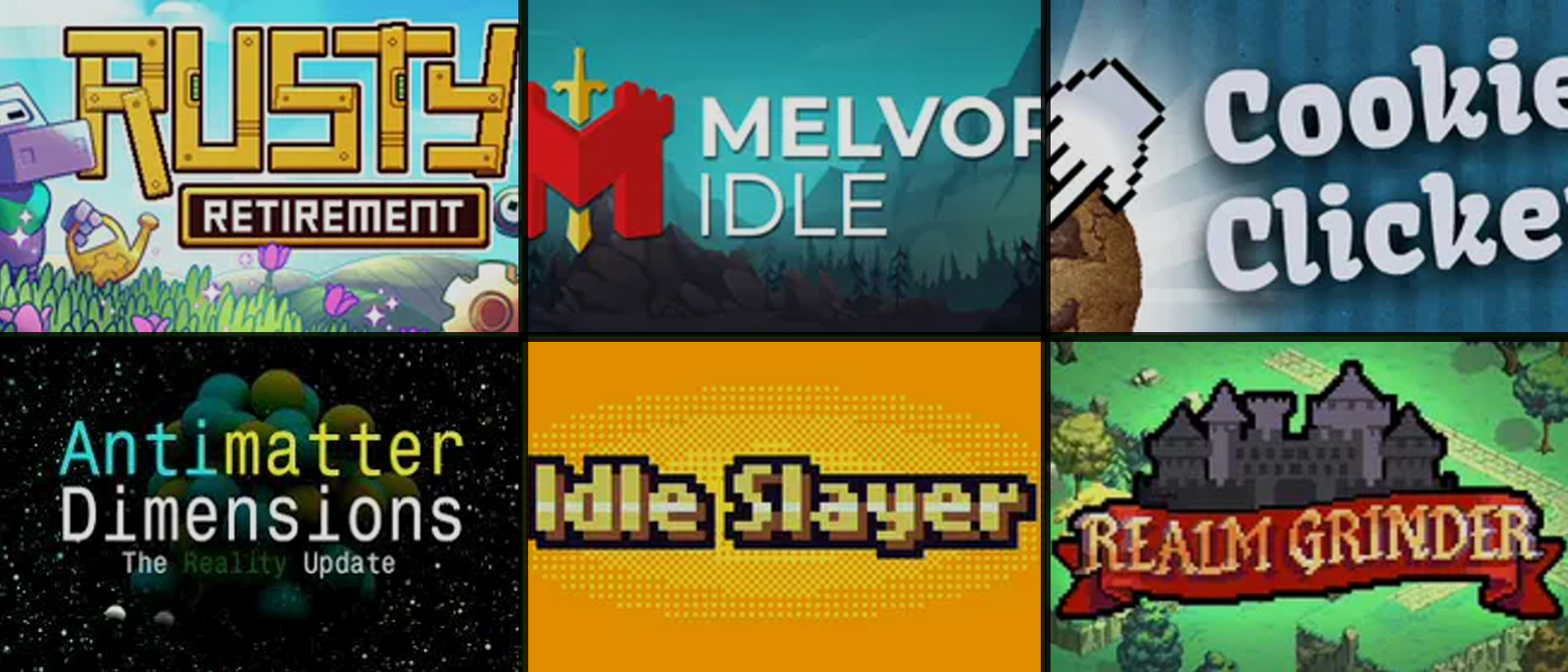
Idle games are not dead in 2026. They have moved beyond simple clickers into browser incrementals, mobile idle RPGs, Steam desktop companions, Roblox social experiences, and hybrid games that borrow idle progression without always calling themselves idle games.
That split is the real story. A decade ago, "idle game" usually meant clicking a cookie, buying upgrades, waiting for numbers to grow, and eventually prestiging. In 2026, the same design DNA appears inside farming sims, RPGs, Roblox experiences, Steam desktop companions, mobile live-service games, and browser experiments. The genre is no longer one thing. It is a progression language that other games keep borrowing.
What Counts as an Idle Game in 2026?
An idle game is a game where progress continues with limited player input. Most idle games use automation, resource growth, upgrades, and returning-player rewards to make waiting feel productive.
Incremental games are the broader category. They focus on growing numbers, compounding upgrades, and layered progression. Clicker games are the more active branch, where repeated input is part of the loop. Idle games are the more passive branch, where automation eventually does the work for you.
In practice, most modern idle games mix all three. A game might start as a clicker, become incremental through upgrades, and become idle once automation takes over.
Idle vs Incremental vs Clicker Games
| Term | What It Means | Typical Example |
|---|---|---|
| Clicker game | The player repeatedly clicks or taps to generate resources | Cookie Clicker early game |
| Incremental game | Progress grows through compounding upgrades and scaling numbers | Antimatter Dimensions |
| Idle game | Progress continues while the player is away or barely interacting | Melvor Idle, Rusty's Retirement |
| Hybrid idle game | Idle systems mixed with RPG, farming, strategy, or social mechanics | Grow a Garden, idle RPGs |
The important difference is not the label. The important difference is how much the game respects your time. A good idle game gives you meaningful decisions after waiting. A bad idle game mostly gives you timers, ads, and pressure to pay.
The Four Big Idle Game Markets in 2026
Idle games in 2026 are best understood by platform. Browser, mobile, Steam, and Roblox each reward different kinds of idle design.
| Platform | What Works Best | Main Risk |
|---|---|---|
| Browser | Pure incremental systems, experimental mechanics, free access | Rough presentation or abandoned projects |
| Mobile | Short sessions, idle RPGs, tycoon loops, offline rewards | Ads, IAP pressure, artificial slowdowns |
| Steam | Premium idlers, desktop companions, deeper long-tail games | Discoverability and clone waves |
| Roblox | Social idle loops, events, UGC virality | Event spikes that fade quickly |
Browser Idle Games: The Experimental Core
Browser idle games are still the spiritual home of the genre. They are lightweight, weird, math-heavy, and often more experimental than mobile or Steam releases.
Games like Cookie Clicker, Universal Paperclips, Trimps, Kittens Game, and Antimatter Dimensions helped define what players expect from incremental design: exponential growth, prestige layers, hidden systems, and the feeling that the game keeps unfolding long after it looked simple.
For gamers, browser idle games are still the best entry point if you want pure systems rather than heavy monetization. They usually care less about cinematic presentation and more about whether the numbers, upgrades, and unlocks keep surprising you.
Mobile Idle Games: Bigger Business, Tougher Trust Problem
Mobile remains the biggest commercial home for idle mechanics, but it is also where player trust is most fragile.
Sensor Tower's 2026 State of Gaming report says mobile game revenue reached $82 billion in 2025 while downloads slowed, which means studios are under more pressure to retain and monetize existing players. That market pressure fits idle games perfectly: daily rewards, events, battle passes, ad boosts, limited-time upgrades, and IAP bundles all plug easily into idle loops.
That does not make mobile idle games bad. Some mobile idle RPGs and tycoon games are deep, polished, and generous. But mobile is also where idle design most often turns into "watch an ad to make the game tolerable." In 2026, the best mobile idle games are the ones that let monetization support the loop instead of replacing the loop.
Steam Idle Games: The Rise of Desktop Idlers
Steam has become the most interesting place for idle games in 2026 because PC players are embracing idle games that live beside other activities.
Rusty's Retirement is the clearest case study. Its Steam page describes it as an idle-farming simulator that sits at the bottom of your screen while you do other things. That is a simple idea, but it changed how many players think about idle games on PC. Instead of being a tab you check, the idle game becomes a small companion while you work, watch videos, browse, or play something else.
GamesRadar reported that Rusty's Retirement helped spark a wave of "bottom-of-your-screen" idle games, including titles like My Little Life, Ropuka's Idle Island, and Tiny Pasture. This is one of the strongest signs that idle games are not fading. They are adapting to multitasking culture.
Roblox Idle Games: Social Scale and Event Peaks
Roblox shows what happens when idle mechanics meet social platforms, live events, and massive youth audiences.
Grow a Garden became one of the most visible idle-adjacent games of the 2025-2026 cycle. PocketGamer.biz reported that it reached 21.3 million concurrent users on June 21, 2025, while also noting that those peaks dropped sharply afterward. That pattern matters: Roblox idle games can generate enormous event spikes, but the challenge is sustaining attention after the event ends.
The Roblox version of idle design is less about lonely optimization and more about social presence. Players return because their garden, pets, crops, friends, trades, or events create a reason to check in. The idle loop becomes a social ritual.
Why Idle Games Still Work for Gamers
Idle games work because they turn absence into progress. Most games punish you for leaving. Idle games reward you for coming back.
That design fits modern gaming habits. Players are busy. They multitask. They play across devices. They want games that can be deep without demanding constant attention. A good idle game gives players the pleasure of progress without the pressure of full-time focus.
The best idle games also create a powerful rhythm:
- Check progress.
- Spend resources.
- Unlock automation.
- Hit a wall.
- Prestige or optimize.
- Return later stronger.
That loop is simple, but it can support surprising depth when upgrades, systems, and pacing are tuned well.
What Changed Since the Classic Clicker Era
The classic clicker era was about numbers going up. The 2026 idle era is about context.
Idle mechanics now appear inside RPGs, farming sims, cozy desktop toys, Roblox experiences, strategy hybrids, and collection games. The player may still be waiting for numbers to grow, but the fantasy around those numbers is stronger.
In older clickers, you might buy another building to make more cookies. In newer idle games, you might manage a farm, build a party, raise creatures, unlock a town, automate a factory, or leave a tiny world running on your desktop. The math is still there. The wrapper is richer.
The Monetization Problem
The biggest weakness of idle games in 2026 is not simplicity. It is monetization.
Idle games are easy to monetize because they are built around waiting. A designer can make waiting satisfying, or a designer can make waiting painful and sell the cure. That is the line between a fair idle game and a manipulative one.
Watch for these red flags:
| Red Flag | Why It Matters |
|---|---|
| Progress feels bad without ad boosts | The base game may be intentionally slowed |
| Events require constant check-ins | The game may punish healthy play habits |
| Paid boosts skip the best decisions | Monetization may replace strategy |
| Too many currencies | Complexity may be hiding pressure |
| Offline progress is heavily capped | The game may not actually respect idle play |
A good idle game can sell expansions, cosmetics, convenience, or optional boosts. The problem starts when paying becomes the only way to make the pacing feel normal.
What Makes a Great Idle Game in 2026?
A great idle game in 2026 respects the player's time and intelligence. It should feel good when you are active, but it should not collapse when you step away.
The strongest idle games usually have five traits:
| Trait | What Good Looks Like |
|---|---|
| Clear progression | You always understand what you are working toward |
| Meaningful automation | Unlocks change how the game plays |
| Fair offline progress | Leaving the game feels natural, not punished |
| Strategic resets | Prestige creates interesting choices |
| Honest monetization | Paying is optional, not the real progression system |
The best test is simple: after waiting, does the game give you a decision worth making? If the answer is yes, the idle loop is working.
The 2026 Idle Game Taxonomy
Idle games in 2026 fall into several recognizable types:
| Type | Best For | Examples / Signals |
|---|---|---|
| Classic browser incrementals | Systems-first players | Cookie Clicker, Antimatter Dimensions |
| Idle RPGs | Buildcraft and long-term goals | Melvor Idle-style progression |
| Mobile idle tycoons | Short sessions and daily play | Ad/IAP-heavy market |
| Cozy desktop idlers | Multitasking and atmosphere | Rusty's Retirement-style games |
| Roblox social idlers | Events, friends, platform virality | Grow a Garden-style experiences |
| Marketplace clickers | Collection and speculation | Banana-style Steam phenomena |
This taxonomy explains why the genre can look both mature and new at the same time. The old mechanics are familiar, but the platforms keep changing the shape of the experience.
So, What Is the State of Idle Games in 2026?
Idle games in 2026 are healthier than they look, but harder to define than before. The genre is no longer just clickers and browser tabs. It now includes cozy Steam companions, mobile RPG systems, Roblox megahits, and classic incremental games that still attract optimization-minded players.
For gamers, that is good news. If you dislike ad-heavy mobile idle games, you can play browser classics. If you want atmosphere, Steam desktop idlers are growing. If you want social scale, Roblox has turned idle mechanics into event culture. If you want depth, incremental RPGs and prestige-heavy games still deliver months of progression.
The state of idle games in 2026 is fragmentation, not decline. The genre survived because its core promise still works: leave, return, improve, repeat.
FAQ
Are idle games still popular in 2026?
Yes. Idle games are still popular in 2026, but the audience is spread across mobile, browser, Steam, and Roblox instead of one obvious platform.
What is the difference between idle and incremental games?
Incremental games focus on compounding progress and growing numbers. Idle games are a type of incremental game where progress can continue with little or no player input.
Are idle games addictive?
Idle games can be habit-forming because they reward return visits, visible progress, and optimization. The healthiest idle games make those loops satisfying without requiring constant attention.
What is the best platform for idle games in 2026?
Browser is best for pure incremental design, mobile is best for short sessions, Steam is best for desktop idlers, and Roblox is best for social idle experiences.
Are mobile idle games pay-to-win?
Some mobile idle games are pay-to-win or heavily ad-driven, but not all of them. The key warning sign is whether the game feels intentionally slow unless you watch ads or buy boosts.